
What is a Valve Actuator? A Complete Guide to Types & Applications
Under our cities and towns, there is a large network of pipes. From the water in our faucets to the fuel in our cars, they control the flow of critical fluids. At the core of this system are valves. But valves alone can’t manage all the flow without the help of actuators. You can say valve actuators are the muscles of a valve that make it open and close.
Compared to handwheel, automated valve actuators offer more precision, safety and efficiency. They allow automated operation, reduce human intervention, and optimize plant performance. This guide provides a detailed overview of valve actuators. We will also explore how they work, the different types available and the extensive applications of valve actuators.
What is a Valve Actuator?
This mechanical device is designed to move and control the valve. It takes some form of energy and then converts it into the mechanical motion needed to push a valve stem. The resulting mechanical motion is then used to position the valve’s internal components, such as a ball, disc or plug, to control the flow.
How Valve Actuators Work?
Valve actuators transform energy into mechanical motion in order to operate the valves. They may utilize electricity, air (pneumatic), hydraulic fluid or even mechanical power. Actuators generate a rotary movement in ball and butterfly valves or a linear movement in gate, globe, and diaphragm valves. Modern actuators have control and feedback to correct the position of the valve. They react to complex or simple modulating signals. Most of them have fail-safe functions, which shift the valve to a safe position in case of lost power or air. This will stop uncontrolled flowing, over-pressurization and damage to the system. All in all, actuators guarantee safe, dependable and economical performance in industrial actions.
Major Types of Valve Actuators
Electric Valve Actuators
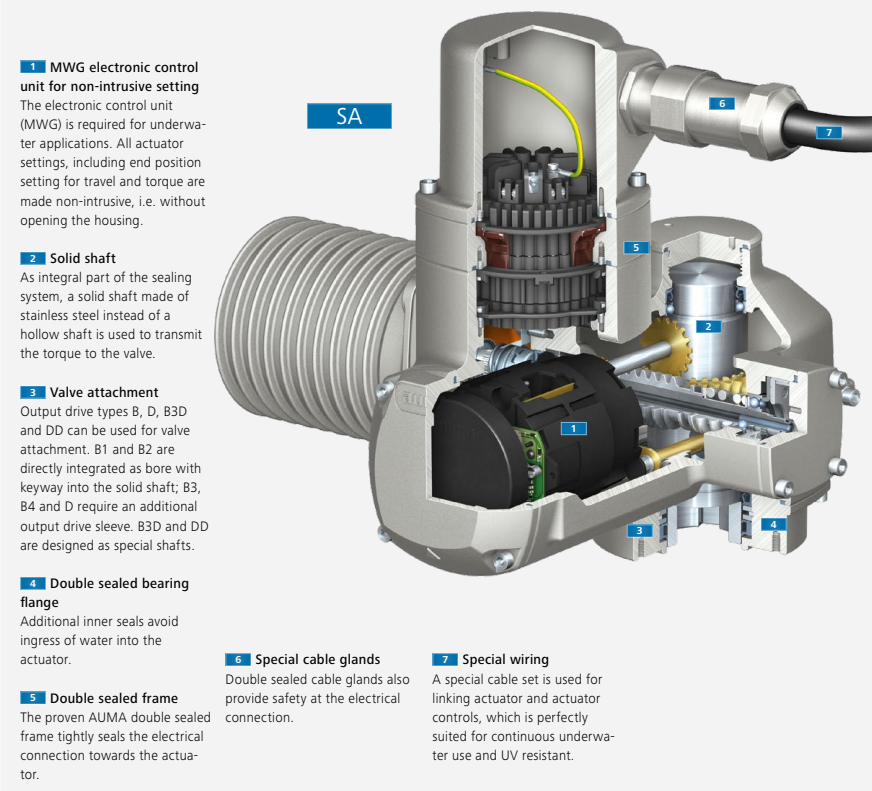
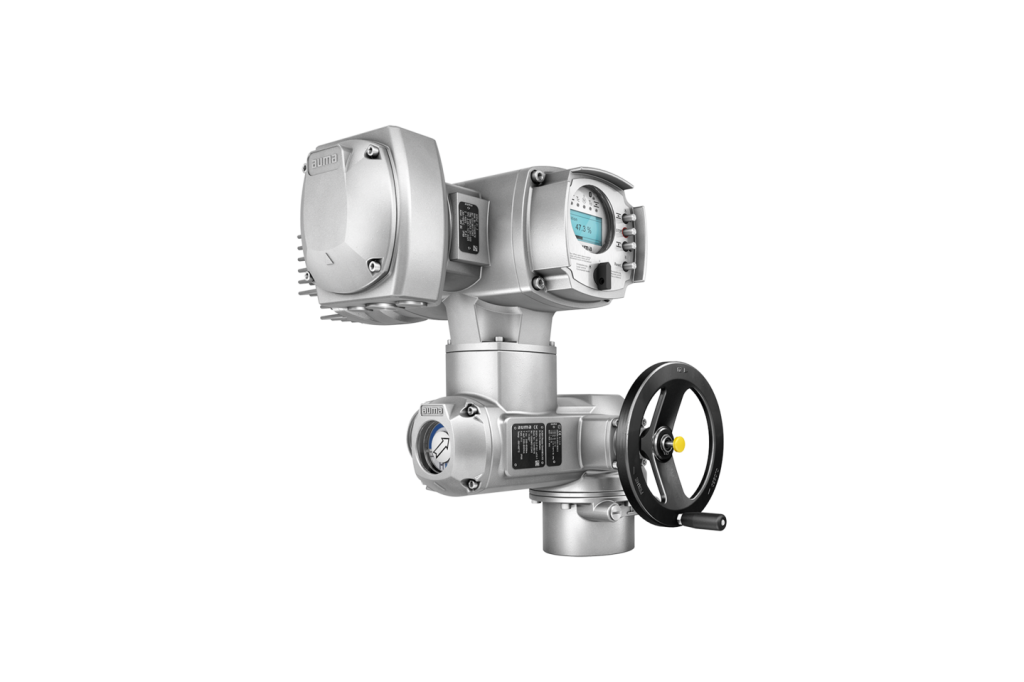
Electric actuators use an electric motor to drive a gear train. It, in turn, produces the required torque or thrust to operate the valve. They are known for their precision and ease of integration with digital control systems.
They feature a motor, a gear train to increase torque, limit switches and a local control unit with buttons for local operation.
AUMA is considered to be the largest and most reliable electric valve actuators manufacturer.
Applications: water and wastewater treatment, HVAC systems, and general industrial processes.
Advantages
- High precision and control.
- Easy to interface with PLCs and SCADA systems.
- No oil or air leakage.
Limitations
- Trade-off between force and speed
- Higher initial cost.
- Complex technology
Pneumatic Valve Actuators
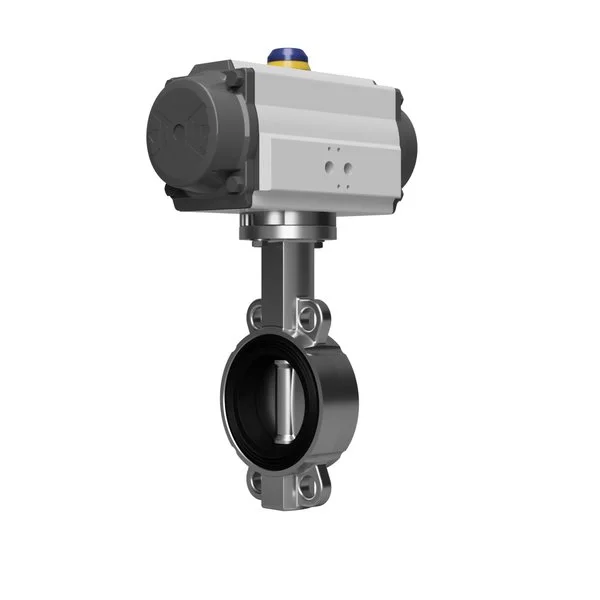
These actuators are the workhorses in many industries. They use compressed air to move a piston or diaphragm, producing linear or rotary motion. They are simple, reliable, and safe, thus suitable in dangerous locations. It comes with two types: spring-return or single-acting and double-acting.
Applications: Widely used in chemical, oil & gas and petrochemical industries, where fast and safe valve operation is required.
Pros
- Very fast operation
- Simple and robust design
- High power-to-weight ratio
- Safe in explosive atmospheres.
Cons
- Requires a clean and reliable compressed air supply
- Limited energy efficiency
- Leakage issues
Hydraulic Valve Actuators
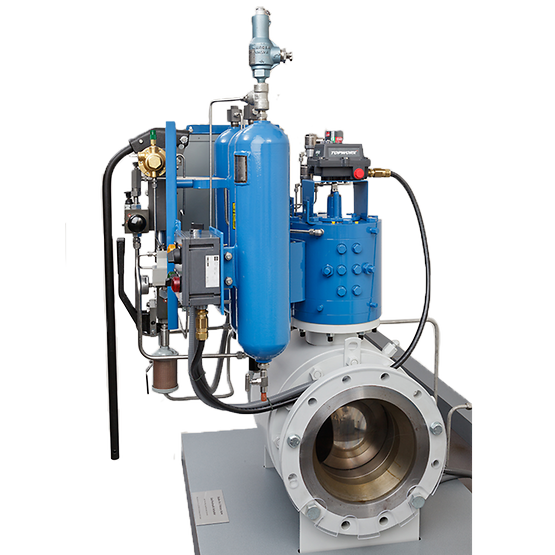
Hydraulic actuators work under the same principle as pneumatic, except that a pressurized hydraulic fluid (oil) is used in their setting. The operating mechanism involves a pump pressurizing fluid, which is then directed to a piston or vane within the actuator. The high pressure creates a powerful linear or rotary force.
Applications: Controlling massive water gates in hydroelectric dams, operating large valves in major pipelines, and in offshore oil platforms.
Advantages
- They can produce extremely high forces and torques.
- Offers stiff, precise, and fast control of large loads.
Drawbacks
- The system is complex
- Requiring pumps, reservoirs, and extensive plumbing.
- Louder than other systems
- Higher maintenance and initial cost.
Specialized Actuators
There are specialized actuators designed for unique challenges:
Electro-hydraulic actuators
This type of actuator combines the high precision of an electric motor and the high output of a hydraulic system. They are small machines, ideal in the case where accuracy and power are required.
Explosion-proof actuators
These actuators are specially designed and certified (e.g., ATEX, IECEx) to withstand any explosion.
Smart/Intelligent actuators
These are advanced actuators and have microprocessors (along with positioners and communication) embedded within them. They have the capability of self-diagnosing, reporting their position, health and condition to a central control system, which allows them to maintain it and implement advanced process control.
Rotary vs. Linear Actuators: Difference.
The kind of movement an actuator makes should conform to the valve design that it works with.
Rotary Motion
This is a rotary movement. It is mostly referred to as quarter-turn valves, which need a 90-degree turn to pass from fully close to fully open. These include:
- Butterfly Valves: This is a disc that rotates on a fixed axis to open or close a stream.
- Ball Valves: This consists of a ball that has a hole in it and which turns to position the hole in the pipe.
- Plug Valves: This is the same as a ball valve except that a tapered cylindrical plug is utilized.
Linear Motion
It is a linear, push-pull motion. It is necessary in valves, which close by pushing a disc or gate out of circulation.
- Gate Valves: This is a disc with a hole in it, similar to a gate, which is taken out of the flow stream directly upwards.
- Globe Valves: In this system, the throttling is exceptionally good, and this is accomplished by pushing a plug linearly against a fixed seat.
- Control Valves: These are highly regulated agents to maintain a flow, and they rely virtually always on linear motion.
Key Applications of Valve Actuators
Valve actuators are found in nearly every industry that handles fluids. Here are some key examples:
Oil & Gas
Management of the flow of crude oil, natural gas and refined products by extremely long pipeline networks and processing plants.
Water and Wastewater
Manage water treatment processes, distribution, and sewage systems to guarantee the health and safety of people.
Power Generation
Controlling the flow of steam, cooling water and fuel inside power plants to maximize the production of electricity.
Pharmaceuticals
It involves sterilization and perfect control of the handling and exchanging of ingredients during the production of drugs.
Chemical and Petrochemical
The safe and correct handling of aggressive and hazardous chemicals within the reactors and processing units.
Food and Beverage
Regulation of the flow of ingredients, cleaning solutions, and finished products under high hygiene-related standards.
HVAC and Building Automation
Regulate chilled water, hot water, and air flow in commercial buildings for comfort and energy efficiency.
How to Choose the Right Valve Actuator
Here are some key points for buyers to consider while buying a valve actuator. It will surely help you make the right decision for your business.
Torque Requirements
The actuator must provide enough force to move the valve under maximum pressure. Undersizing can cause valve failure.
Speed and duty cycle
Check its speed to operate and how often it cycles. High-speed or high-cycle processes may require pneumatic or specialized actuators.
Environment
Actuators must withstand installation conditions. Indoor, outdoor, corrosive, or explosive environments require proper enclosures and material choices.
Control type
Decide between simple on/off control or precise modulating control. Modulating actuators allow the valve to be positioned anywhere between fully open and closed.
Maintenance requirements
Consider long-term upkeep. Electric actuators need less maintenance, while pneumatic systems require regular checks.
Standards compliance
Make sure the actuator meets relevant certifications like IECEx or IP ratings for safety, especially in hazardous conditions.
Advantages of Automated Valve Actuation
- Actuators reduce the time, hazards, and reliability of fluid handling systems with computerized actuators.
- They automate valve control for uniform and accurate functioning.
- By minimizing human contact with dangerous materials or harsh environments, they ensure sure safety of employees.
- Fast and effective actuation eliminates time wastage in vital operations.
- The operators have access to the control of the valves in a central control system or SCADA.
- The energy use is optimized by adequate control of valves to avoid overworking pumps and motors.
- Automation guarantees consistency and presence of repeatability in the positioning of the valves.
General Problems and Resolutions
Besides benefits, there are also some challenges to using valve actuators. Here we’ve listed some issues and their solution for your ease.
Actuator sizing issues
Improper sizing can bring about valve malfunction. Torque or thrust should always be calculated correctly.
Environmental challenges
Moisture and extreme temperatures may damage actuators. Use appropriate IP-rated enclosures and materials.
Power and air supply limitation
Unstable electricity or contaminated air can affect performance. It is better to ensure a stable and clean supply.
Integration with PLC/SCADA systems
The communication errors can take place when there are incompatible protocols. Check compatibility and correct wiring.
Maintenance negligence
Lack of inspection can shorten actuator life. Schedule regular preventive maintenance
Final Verdict
Valve actuators are the driving force behind safe and efficient fluid management. They regulate flow initiation and flow shutdown, and flow control. The choice of the appropriate actuator should be made with proper attention to the torque, speed, environmental factors and control requirements to ensure long-term stability. In the future, with the emergence of smart actuators that have been equipped with Industry 4.0 and IIoT, operations are being revolutionized. This means that these intelligent devices are able not only to perform commands but also to deliver real-time data to predictive maintenance, process optimization and maximize efficiency.